

Productive Struggle is Misunderstood (1 of 2)
It's real but not where most look for it

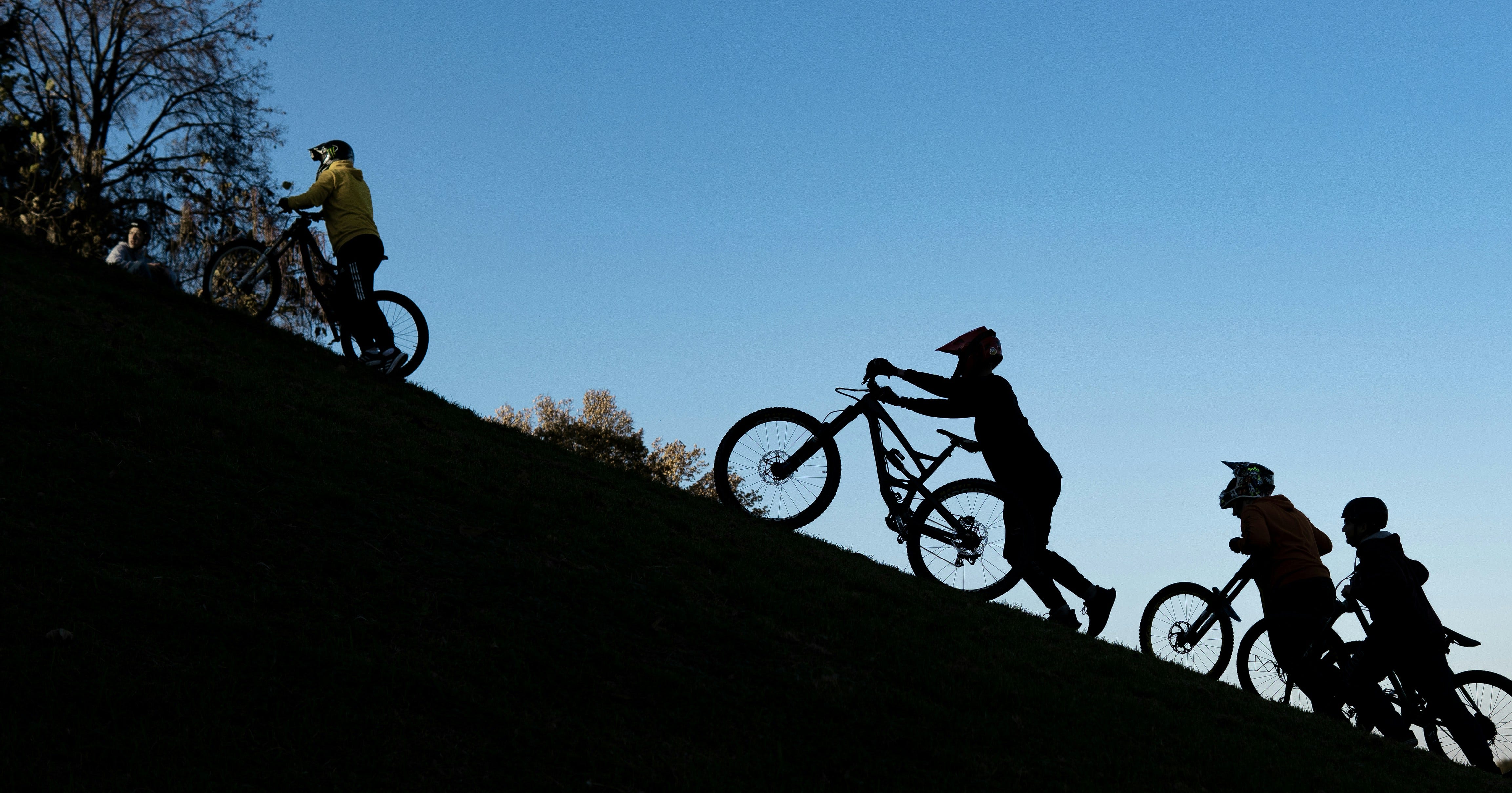
I coached girls youth soccer for about a decade. One of the aspects that amazed me is that the kids came back from a winter or summer break immediately better than they were at the end of the prior season. Better even though many of them hadn’t played soccer at all during the break. Or watched others play.
There was of course obvious physical maturation. Kids’ bodies are changing all the time. But their mental game got better too.
How did that happen? How did they learn to play soccer better without playing soccer? The general thinking among educators is that learning requires productive struggle, not down time. But that reflects a misunderstanding of how productive struggle is defined, when it applies, and how it leads to learning.
There is a common and I think correct view that AI pushes human contributions more toward judgments, especially ones about more abstract and complex issues than most jobs deal with today. Those judgments, which I call wisdom instead because of some of the negative connotations of the word “judgment,” rely on productive struggle. We’d better understand the nuances.
Defining Productive Struggle
“Productive struggle” comes from mathematics education. Hiebert and Grouws defined it in 2007, and the National Council of Teachers of Mathematics later made it one of its recommended teaching practices. In that original sense it means the effort a student spends to make sense of something that isn’t yet clear, to grasp the structure of a problem and how its ideas connect, rather than to reach an answer the fastest way possible. Two things are built into the definition and easily lost. The struggle has to be aimed at understanding, not recall. And the problem has to sit within the student’s reach, since Hiebert and Grouws were explicit that the term does not cover needless frustration or a problem that is simply too hard.
In the research literature, productive struggle is almost always studied in one narrow form, productive failure, where students take on a problem before they’ve been taught how to solve it. Productive struggle as Hiebert and Grouws meant it is wider, covering any time a teacher lets students grapple with an idea instead of stepping in, whether they’re inventing an approach from scratch, reconciling two methods that disagree, or working out why a procedure they’ve been shown actually holds. Productive failure is just the corner of that space clean enough to run as an experiment.
The phrase has drifted because its words are too ordinary to hold it. “Productive” doesn’t consider “toward what?” and “struggle” sounds like plain effort, so together they are often interpreted as “working hard is how you learn.” Once it means only that, it gets attached to anything a student finds difficult, including drilling facts and grinding through rote procedures, where the struggle is just the gap before someone tells you the answer.
“Productive struggle” got mentally combined with “grit” (the best-selling book of that name came out at a similar time). But elbow grease isn’t the point (nor was it in the book), and as originally defined it’s not a term applicable to all learning objectives.
The bigger surprise is the struggle isn’t really where the learning happens.
What the Struggle Does
When a student wrestles hard with a genuine problem, the kind where there’s a real structure or a real judgment to work out, they often come away no better at it than when they started. Ask them at the end of the period and they still can’t quite do it, still can’t explain it. By the obvious measures, nothing happened.
But it would be unusual, or perhaps not a difficult enough challenge, if the struggle paid off while in the room. The job of struggle time is to leave the brain holding a question it hasn’t resolved, not to produce the answer while you watch. And a brain doesn’t drop a real, unfinished question just because the bell rang. It keeps working it underneath, the way a problem you couldn’t solve nags at you through dinner and then turns up half-answered in the shower, or looks clearer after a night’s sleep.
The effect of stepping away from a hard problem and coming back with a better answer is called incubation, and it tends to be stronger the longer and harder you wrestled before you walked away. Some of the offline simulation our brain is doing is conscious to us, especially if interest in the topic is strong. But most of it is silent, chugging away on the possibility space in our subconscious, the portion of our intellect that can do many things in parallel. That quiet, offline work, the mind turning the problem over and testing it against everything it already knows, is what slowly builds the understanding. The struggle loads the question. The hours and days afterward answer it.
A factual or procedural task doesn’t kick off imagination in the down time. The moment they’re told the answer the question closes, and a closed question gives the brain nothing to keep working.
In contrast, a difficult, ill-defined challenge with many situational variants and no single right answer is great fodder for the unconscious mind. My players spent a season meeting problems they couldn’t yet solve. They may have read a play a beat too late or drifted out of position, and the winter gave them months for the unsolved version of the game to keep running in the background.
Productive struggle is relevant only to certain tasks, especially ones involving judgments toward an uncertain answer. But even then, the learning isn’t during the productive struggle. It’s in the downtime afterward.
Where the Evidence Runs Out
Education these days focuses strongly on evidence-based practices, but it seems people frequently forget what the experimental task even was and apply the research lessons beyond their validity.
The strongest evidence of productive struggle (actually, productive failure) comes from studies largely of math or science conceptual learning. Students get a problem before being taught the method, most famously a table of athletes’ scores across seasons where the job is to invent a way to measure which player is the most consistent, before anyone teaches standard deviation. They work it alone, produce their rough measures, and then in the same unit the teacher teaches the real standard deviation formula by building on what they came up with. Soon after, within a day or two, they take a test on standard deviation, and the ones who struggled first match the directly-taught group at running the procedure while beating them at explaining why it works and applying it to a related untaught problem. The same setup has been run on variance, on rate and speed, and on a few science concepts.
The answer arrives fast in these studies, soon after the struggle and inside the same lesson, with the test a day or two behind. There is no long gap, no sleeping on it, no week for the problem to settle. So what they show is narrow. Wrestling with a problem before being told the method produces better understanding than being told first, measured almost immediately, with the better understanding most likely coming from the struggle priming students to get more out of the instruction that follows.
The research says little about a problem continuing to work on someone after they leave the room, which is a separate claim, and mine.
Every topic in the productive struggle research shares one feature. Each has a right answer and a method you can check against it, which is what lets a study score whether a student understood. That is the precondition, not a detail, and the researchers say so themselves, that the effect may hold only in domains structured enough to evaluate a solution against a known target. That’s a statement about the limitation of experiments instead of the phenomenon. The evidence covers learning where students are given the answer quickly.
It does not reach the problems I think reward struggle the most, the open, multi-factored judgments with no settled answer, where reasonable people weigh the factors differently. The consistency task shows the seam. Asking which player is most consistent is genuinely open, since the range, the distance from the average, the spread of the middle scores, and the swing relative to a player’s usual output each fit a different purpose, and a coach, an investor, and a factory inspector would not necessarily pick the same metric. The research studies tend to close that openness on purpose, fixing standard deviation as the answer so the learning can be scored. Take that decision back out and you have the kind of problem no study has measured, because once “better” is a judgment there is nothing clean left to score. It is the same wall that makes AI so hard to grade on its squishier work, where the quality can be apparent but giving it a number is impossible.
We all know from personal experience that the brain keeps chewing on a hard problem, especially one we care about or have something riding on. I am relying on that, plus an extrapolation from the productive struggle research, to argue that down time is where a lot of the learning and consolidation actually happens. The evidence itself is much narrower.
The struggles worth protecting, then, are the open ones, the questions with no answer in the back of the book that a student leaves the room still holding. Those are the ones the research hasn’t measured and the ones that build judgment, and they are exactly the kind a packed, answer-now classroom is built to shut down.
Those struggles build wisdom, the judgment about open and complicated things that no one can simply be told, and that kind of thinking is exactly the human contribution that grows in value as AI takes over the facts and the routine.
The irony is that the learning that most needs real productive struggle is the learning that schools are least equipped to produce. Struggle of this kind asks for content reach, consideration of learner interests, and unhurried time, but schooling constrains scope, considers student interest only at the margins, and leaves little space for the unconscious to do its work. Schools need to set the struggle up so it queues something worth chewing on, and then guard the quiet afterward where the chewing happens. Each role in education is constrained in ways that are counter to making a struggle truly productive. But understanding what productive struggle truly is, including the hidden learning afterward, leads to a few tweaks that should be helpful. That’s the subject of the second article in this series.
©2026 Dasey Consulting LLC
Fantastic take, Tim. “The struggles worth protecting, then, are the open ones, the questions with no answer in the back of the book that a student leaves the room still holding.” Completely agree here. I’ve designed over 25 years of instructional practice around this concept. For me, true friction (productive struggle) results in traction — durable skills that strengthen over time. I really resonate with your reminder about incubation. Personally, it’s one of my most treasured way of solving a problem. But it has to mean something to the student. It has to have purpose, authenticity, challenge, intrinsic motivation…which is precisely why it is difficult to accomplish in a traditional setting. The question is this: How do we design the conditions for this open and alluring type of learning? I know I have my take and hope to write about it before the end of the summer, and I trust you do as well. Would love to focus on this with you and your readers.
I struggle :) to differentiate the benefits of productive struggle (I like your use of "productive failure") vs. the spacing effect, which your text also implicates. One technique that might make things easier ("easier" in a good way, not a counterproductive way) is to use AI to optimize and balance struggle and spacing -- as Matt Strand writes, to "design the conditions for this open and alluring type of learning." Then again, there must also be a strong human role in making struggle and spacing (not to mention learning goals themselves) effective for all learners. Looking forward to part 2.